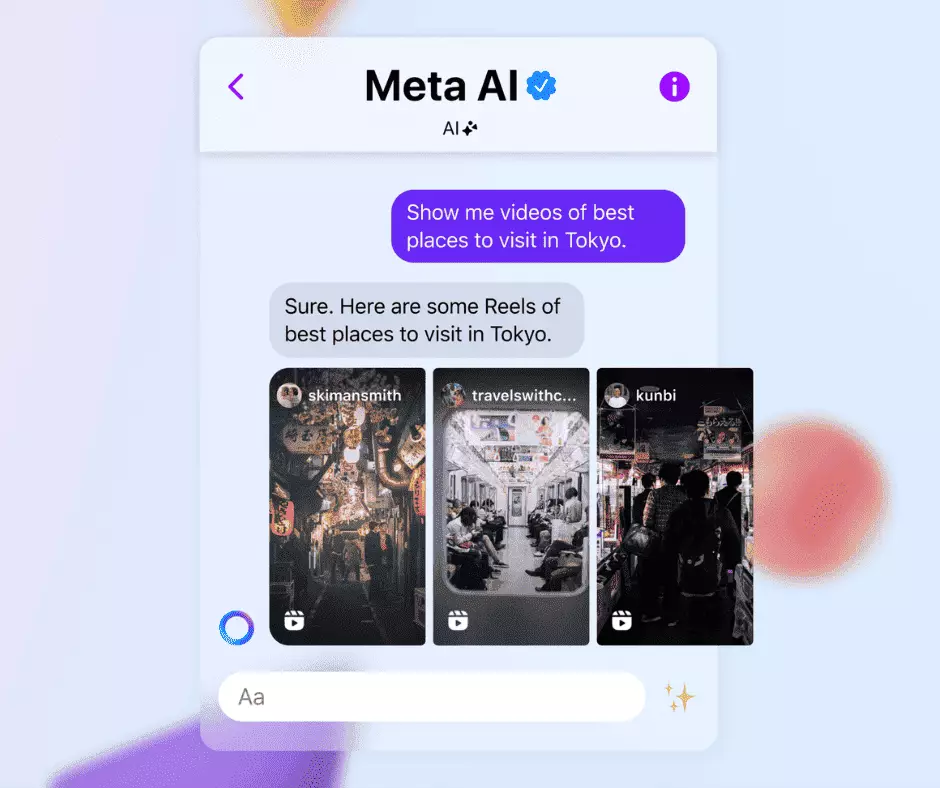
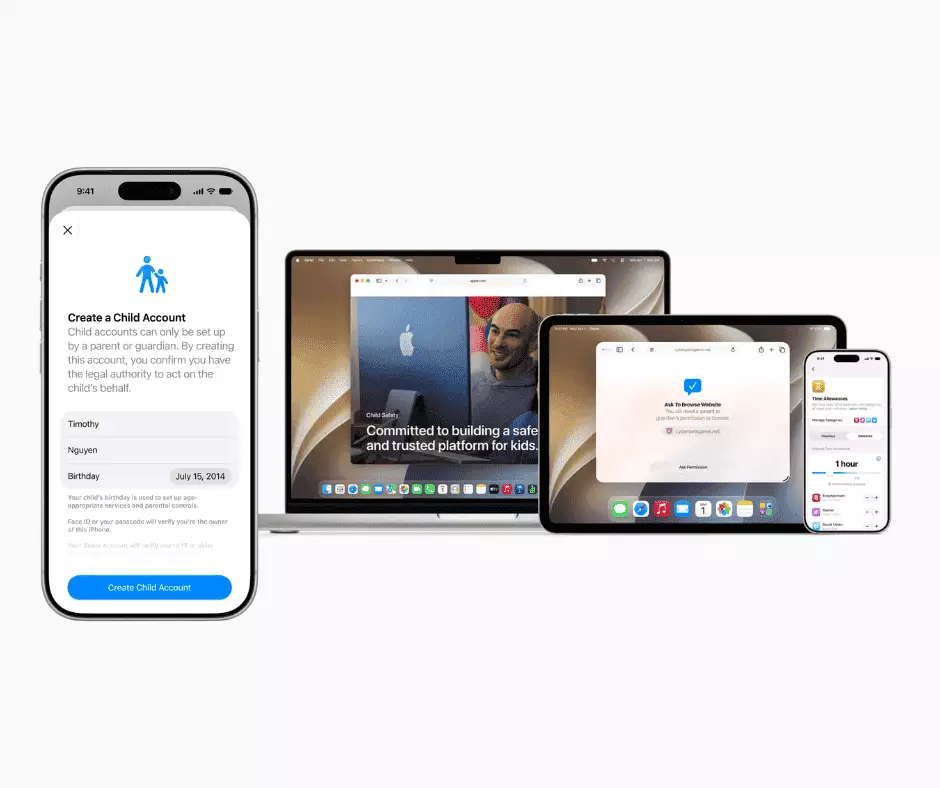
What is emerging is a new structure for the internet, where access, visibility, and interaction are shaped earlier and more deliberately at the system level. This affects families, educators, platform designers, and anyone working in digital communication.
A Turning Point at WWDC 2026: AI Expansion and Safety Infrastructure
WWDC 2026 was heavily focused on Apple Intelligence and a rebuilt Siri AI, designed to handle more conversational tasks, understand context across apps, and respond in a more human-like way. Reports from the event highlight deeper integration across apps like Messages, Safari, Mail, and Photos, with AI features designed to support productivity and personal assistance.Alongside this AI expansion, Apple placed significant emphasis on trust and safety. The company introduced redesigned child accounts, more structured Screen Time tools, and expanded communication protections. These features allow parents to manage who children can contact, what apps they can access, and how long they can use specific categories of apps such as social media or games.
A key change is that these protections are embedded at the operating system level, meaning they apply across devices and apps rather than relying on individual platform settings.
Australia’s Social Media Ban and Its Influence on Platform Design
Australia’s under-16 social media ban has become a reference point in global policy discussions around youth digital safety. The regulation prevents users under a certain age from creating or using accounts on major social media platforms. This has forced both policymakers and technology companies to reconsider how age verification and digital boundaries should work.Coverage from WWDC 2026 suggests Apple’s new child safety framework was partly influenced by Australia’s approach, particularly the idea that responsibility should sit at the device level rather than solely within individual apps. This shift changes how platforms think about compliance, identity, and access control.
Instead of asking each app to manage safety independently, the operating system becomes the gatekeeper for age-appropriate access.
What Apple’s New Child Safety Features Actually Do
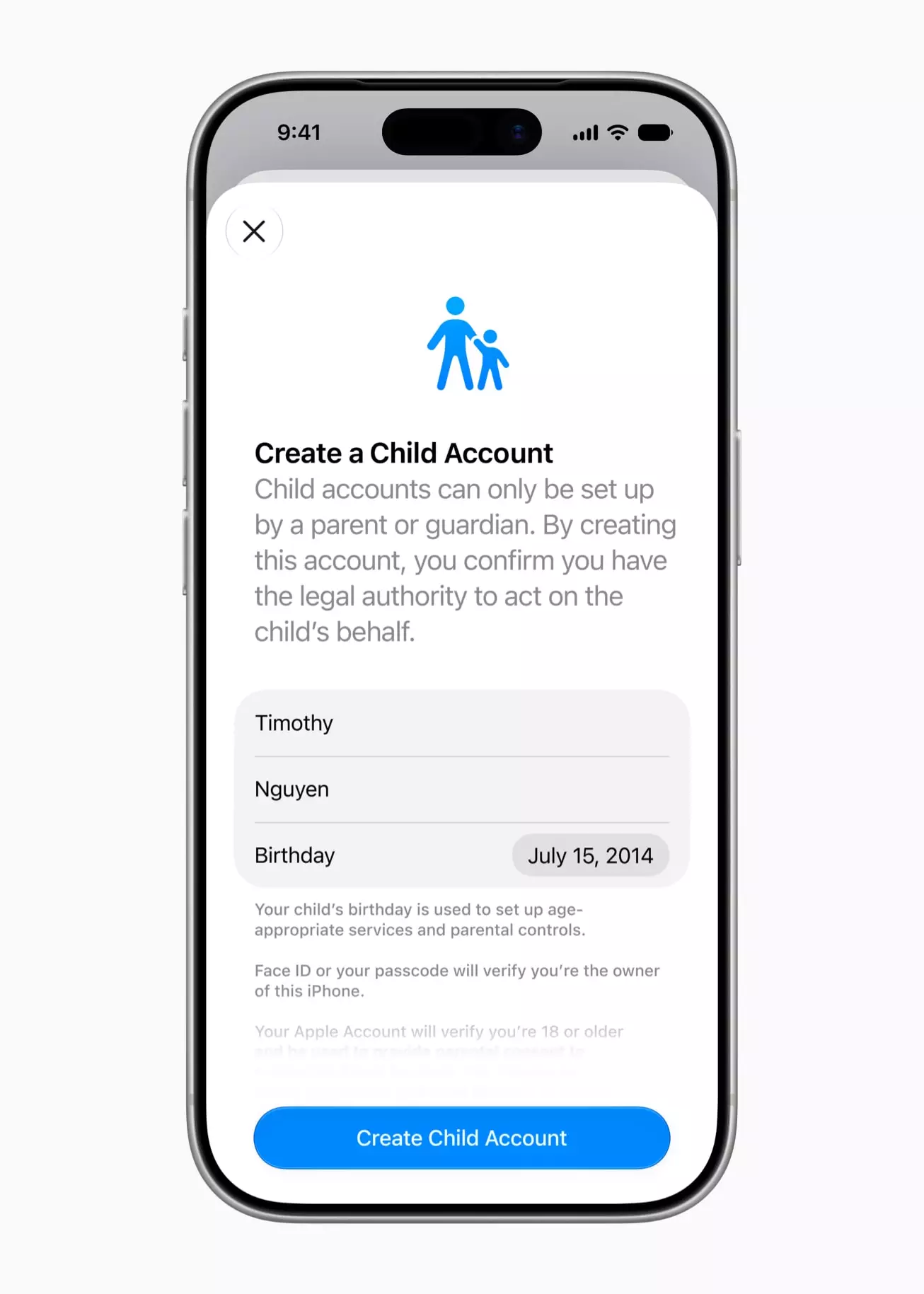
Apple’s updated system introduces several practical tools designed to give parents more structured oversight while reducing friction in everyday use.
Child accounts now act as a foundation for device setup, automatically applying age-appropriate restrictions. These include limits on adult websites, curated app store access, and approval flows for downloads or purchases. Parents can approve requests directly, creating a simple decision loop rather than a complex settings process.
Screen Time has also been redesigned to give clearer visibility into how devices are used. Time allowances can be distributed across categories such as entertainment, gaming, and social apps. Communication safety tools now intervene more actively, including warnings and blurring of sensitive content in messaging environments.
The focus is on making control more accessible without requiring technical expertise from parents.
Why AI Changes the Stakes for Child Safety Online
The introduction of advanced AI systems like Siri AI adds a new layer to the child safety conversation. AI systems are now capable of understanding images, summarising content, interacting across apps, and generating responses in real time.This creates both opportunity and risk. On one hand, AI can help filter, guide, and explain content in age-appropriate ways. On the other hand, it increases the speed and volume of content creation and discovery, which makes oversight more complex.
As noted in broader coverage of WWDC 2026, AI-driven systems are accelerating how quickly children can access information, including content that may not be suitable for their age group. This is one of the reasons Apple has embedded stronger safeguards directly into the operating system rather than leaving control to individual apps.
The Gap Between Available Tools and Real World Use
A recurring issue highlighted in commentary around Apple’s updates is that many parents already have access to safety tools but do not fully use them. This creates a gap between what platforms offer and what families actually implement.Reasons for this include complexity, lack of awareness, and the difficulty of managing multiple settings across different apps. Apple’s redesign attempts to reduce this friction by centralising controls and making permissions more visible and immediate.
However, technology alone does not close the gap. Education, awareness, and behavioural habits still play a major role in whether these systems are effective in practice.
A Shift in How Digital Responsibility Is Shared
The combination of Apple’s WWDC 2026 updates and Australia’s regulatory approach signals a broader redistribution of responsibility across the digital ecosystem.Platforms are being asked to build safeguards into their systems. Governments are introducing clearer age-based rules. Parents are being given more structured control tools. At the same time, children are growing up in environments where access is shaped earlier and more consistently by design.
This does not eliminate risk, but it changes where responsibility sits. Instead of being managed at the point of exposure, safety is increasingly designed into the environment itself.
What This Means for the Future of Digital Communication
As AI systems become more integrated and regulations become more defined, digital communication will likely become more segmented by age, context, and permission level. The same platform may behave differently depending on who is using it and how their account is structured.For creators, educators, and organisations communicating online, this means content must be designed with clarity, context awareness, and adaptability in mind. Messages will need to remain understandable even when filtered through different safety layers or access controls.
Digital experiences are becoming more structured, more personalised, and more governed by safety frameworks than in previous generations of software design.
Need help navigating these shifting digital landscapes and safety requirements? Our marketing assistants can help you adapt your digital strategy. Contact us now to learn more!